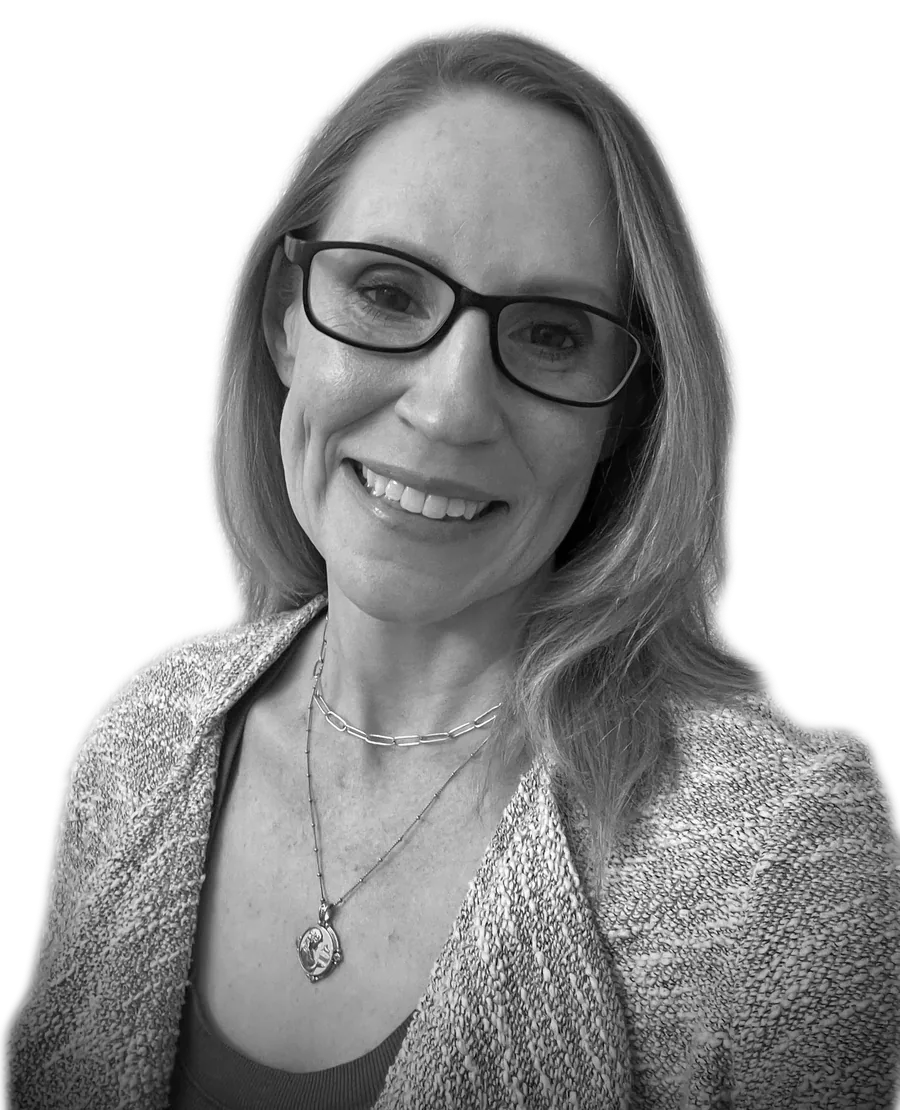
I still remember the smell of the newsroom at 11pm on a deadline night, ink and burnt coffee and the printer jamming for the third time, and somebody yelling for copy. That's where this whole thing started, not in a classroom about adult learning theory.
I edited the Arts & Entertainment section of my college paper before I even knew what I wanted to do with my life. Then I took a break from school entirely and ended up designing pages and print ads at a local paper, the kind of job where you learn fast because there's no time not to. I picked up freelance assignments on the side, one story at a time, until eventually I was the Community Voice editor writing for about 17,000 readers a week. People think journalism is about the byline. It's really about sitting across from a stranger and getting them to tell you the truth, then building something out of it they'd actually want to hold in their hands.
When I went back to finish my degree, I kept doing versions of the same work: layout and copy editing, running my school's art and literary magazine, building my first course in grad school. Somewhere in there, I got my Quality Matters and Distance Learning certifications, taught in person, taught hybrid, taught a class I built from scratch entirely online using Camtasia and Desire2Learn. Through it all, I learned the most successful strategy in journalism and instructional design was show, don't tell.
That's the thread that got me into corporate work. I started as a technical writer at Yardi, then moved into a hybrid writing and instructional design role at CodeMettle, where I built a small content team from nothing and mentored them through creating courses and documentation for defense, government, and commercial clients. From there, I landed at Surgical Information Systems, and this is where the job got physical: I traveled across the Midwest and East Coast into actual operating rooms, watching surgical staff work in real time, figuring out what their training needs were before they ever said a word. I partnered with a videographer and a voice-over artist to build out full video suites for a couple of branches of our software, tracked what was landing through analytics, and kept rebuilding what wasn't. Most recently, at InnovAge, I led weekly virtual instructor-led (VILT) HR onboarding sessions, worked on instructional design projects, and built compliance training.
People assume good training starts with good content. It doesn't. It starts with someone actually diagnosing what's broken, which is the part everyone skips because it's slower and less satisfying than jumping straight to storyboards.
I'm an instructional designer with over 10 years of experience building learning ecosystems across healthcare tech, SaaS, higher ed, and corporate environments, and healthcare tech is where I go deepest: translating high-stakes clinical and operational content into training that's accurate, compliant, and actually works. I've built an L&D team from scratch, onboarded global client teams, and designed for everyone from clinical staff to executives, and while someone could argue that's too many different worlds to specialize in any of them, well, the truth is the diagnostic process doesn't change. Only the content does.
I run needs analysis before storyboards, Kirkpatrick before sign-off, and I have respectful conversations with stakeholders about what training can and cannot fix. My toolkit includes Articulate 360 (Rise and Storyline), WalkMe DAP, and Adobe Creative Cloud, and I use AI the same way I use any other tool: deliberately, for prompt engineering and rapid prototyping. I always build for the learner rather than just the person building the course. Accessibility isn't a checkbox I add at the end; it's baked in from day one. I move between ADDIE and SAM (mainly) depending on what the project actually needs, not whichever one is trendier.
I'm still upskilling; right now it's Articulate Storyline and figuring out where new AI tools genuinely help versus where they're just noise. Some things about this job don't change: you diagnose first, you build second, and you never stop asking whether the thing you made actually helped anyone or how you can make it even better.